
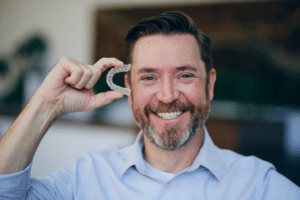
For patients in Greenwood Village, CO and surrounding communities, Total Orthodontics provides care for children, teens, and adults. Dr. Brooks Barefoot, Dr. Kevin Theroux, and Dr. Elizabeth Donahue are Board-Certified Orthodontists who offer braces, Invisalign, and other orthodontic treatment options.
If you have not started treatment yet, knowing how progress is checked can help you understand what to expect before choosing an orthodontic option.
What Changes Should You Expect Once Treatment Begins?
The changes you notice depend on what needs to be corrected. Crowded teeth may gradually become straighter, spaces may close, and your upper and lower teeth may begin meeting differently as your bite changes.
Some movements are more noticeable than others. A front tooth rotating into a better position may be easy to recognize in the mirror, while changes involving back teeth or tooth roots may be less noticeable.
Your smile may also look different during certain stages before the final alignment takes shape. Teeth sometimes need to move through several planned positions before reaching the intended result.
This is why appearance alone does not tell the full story. Your orthodontist also checks whether your teeth and bite are responding as planned.
How Does Your Orthodontist Check Treatment Progress?
Regular adjustments give your orthodontist a chance to check how your teeth and bite are responding.
With braces, an adjustment may include changing wires, repositioning a bracket, adjusting elastics, or giving the current wire more time to work. With Invisalign, your orthodontist may check how well the aligners fit and whether your teeth are following the planned movements.
Your orthodontist can also check your bite, appliance condition, and oral health. If a tooth is not responding as expected, the next step may be adjusted to keep treatment moving in the right direction.
These checks remain important even when your smile seems to be changing as expected.
What Can You Do to Help Treatment Stay on Track?
Your orthodontist directs tooth movement, but your daily habits can help treatment stay on track.
Invisalign patients need to wear their aligners as directed and change them on the schedule provided. Patients with braces may need to wear elastics as directed and avoid foods or habits that could damage brackets and wires.
Good oral hygiene also matters. Braces create extra spaces where plaque and food can collect, while aligners should be placed over clean teeth whenever possible.
The American Association of Orthodontists offers orthodontic care guidance on keeping your teeth and appliances clean between visits.
Brushing, flossing, keeping up with regular dental cleanings, and following appliance instructions can help protect your teeth and reduce preventable delays.
Is Soreness or Appliance Trouble a Sign Something Is Wrong?
Not necessarily. Mild tenderness can happen after a braces adjustment or when you start a new set of aligners. This is often related to the gentle pressure used to move your teeth.
Temporary soreness should improve. Persistent pain, repeated irritation, an aligner that no longer fits properly, or recurring problems with brackets or wires should be discussed with your orthodontic team.
A damaged bracket or loose or bent wire can change how force is applied to your teeth. An aligner that does not seat correctly may also need to be checked.
Before treatment begins, your orthodontist can explain what discomfort is normal for the option you choose and when you should contact the office.
What Should You Ask Before Starting Orthodontic Treatment?
A consultation should help you understand what needs to be corrected and which treatment options may fit your needs.
Ask whether braces, Invisalign, or another approach may be appropriate for your teeth and bite. You should also understand what will be expected at home, such as wearing aligners or elastics as directed, and what may affect your treatment timeline.
At Total Orthodontics, your free first visit includes a 3D digital scan with an iTero scanner. Digital X-rays are taken if needed. The doctors review your scans, perform a complete orthodontic exam, and discuss your treatment needs and options.
This gives you a chance to understand the concern, the recommended treatment, and what to expect before deciding whether to begin.
Ready to Find Out What Orthodontic Treatment Could Do for You?
Knowing how progress is checked can make orthodontic treatment feel more predictable. The first step, however, is finding out what your teeth and bite need.
An orthodontic evaluation can identify crowding, spacing, bite problems, shifting teeth, and other concerns. It can also help determine whether braces, Invisalign, or another treatment option may fit your goals.
At Total Orthodontics, Dr. Barefoot, Dr. Theroux, and Dr. Donahue provide personalized orthodontic care for children, teens, and adults. Whether you are exploring braces or Invisalign for the first time or have another concern about your teeth or bite, an evaluation can help you understand your options.
Schedule a consultation with Total Orthodontics in Greenwood Village, CO to have your teeth and bite evaluated, discuss treatment options, and learn what to expect if you decide to begin orthodontic care.

